
"from giant turtles"
300 article(s) found

Description of flavor, taste and aroma characteristics of boutique coffee beans in Santa Cruz Manor
In the mid-15th century, there were legends about enchanted mysterious islands among fishermen fishing in the western Pacific Ocean of South America. It is said that the islands can sometimes be seen clearly from a distance, but when the ship approaches, it disappears again; sometimes it looks like a galleon, sometimes it shows the shape of a witch. The fishermen called these islands Magic Island and thought it was there.

Fragrant Ecuadorian Coffee Manor flavor and taste characteristics of fine coffee beans
When Thomas and the crew landed on the island, they were frantically looking for water and were so thirsty that they squeezed juice from the fat leaves of the cactus to drink. At last a source of water was found in a rocky gully. Thomas attributed it to the gift of God, because it was good Friday, and they had piously celebrated mass before they set out in search of water. But Thomas will never

Ecuadorian Coffee Manor with unique Natural Geographical conditions the Origin and Development History of Santa Cruz Manor
When Thomas and the crew landed on the island, they were frantically looking for water and were so thirsty that they squeezed juice from the fat leaves of the cactus to drink. At last a source of water was found in a rocky gully. Thomas attributed it to the gift of God, because it was good Friday, and they had piously celebrated mass before they set out in search of water. But Thomas will never

Fragrant Coffee Flavor description of Santa Cruz Manor in Ecuador introduction of Grinding degree planting Environment
West coast: including coastal plains and foothills, high in the east and low in the west, generally below 200 meters above sea level, with some hills and low mountains at an altitude of 600 to 700 meters. Belongs to the tropical rain forest climate, the southernmost end begins to transition to the savanna climate. The average annual precipitation decreases from more than 3000 mm to about 500mm from north to south. Central Mountains: the Andes enter Ecuador from Colombia

Fragrant Ecuadorian coffee flavor and taste introduction of boutique coffee beans in manor production area
Central mountain: after entering Ecuador from Colombia, the Andes is divided into the eastern and western Cordillera mountains, with a plateau high in the north and low in the south, averaging between 2500 and 3000 meters above sea level. The Andes run through the middle of the border. The ridges crisscross, dividing the plateau into more than ten intermountain basins. The most important are the Quito basin and the Cuenca basin in the south. Volcanic crowds in the territory
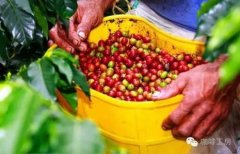
A brief introduction to the flavor and taste characteristics of boutique coffee in Santa Cruz Manor, Ecuador
Central mountain: after entering Ecuador from Colombia, the Andes is divided into the eastern and western Cordillera mountains, with a plateau high in the north and low in the south, averaging between 2500 and 3000 meters above sea level. The Andes run through the middle of the border. The ridges crisscross, dividing the plateau into more than ten intermountain basins. The most important are the Quito basin and the Cuenca basin in the south. Volcanic crowds in the territory

Description of varieties and Flavor of Ecuadorian Coffee introduction to Fine Coffee Bean Manor
The minerals are mainly oil, mainly distributed in Guayaquil Bay, and oil fields are also found in the Amazon Plain. Gold and silver are distributed in Machaki and Saluma and other places. Copper is made in Machaki. There are sulfur mines in the Cologne Islands. In addition, there is iron, lead and so on. The forest area accounts for about 68% of the country's area, mostly in the eastern region, rich in valuable wood, such as mahogany and ointment.

Introduction to the characteristics and taste of high-quality coffee beans in the coffee flavor variety producing area of Hassanda Coffee Garden in Ecuador
The coffee beans produced in Ecuador's Galapagos Islands are organic coffee beans, thanks to the unique ecological environment such as volcanic soil and microclimate, coupled with the fact that they do not use any chemical fertilizers or pesticides, they are recognized as natural green boutique coffee. this naturally grown coffee has a mild taste with a hint of flowers and fruit and caramel. It is understood that the Galapagos Islands are far from Eritrea.

Coffee origin: characteristics of Ecuadorian coffee
Coffee origin: the Ecuadorian Arabian Coffee Tree was first introduced to Ecuador (Ecuador) in 1952 and its coffee quality is very good, especially the coffee harvested in early June. Ecuadorian coffee beans can be divided into two varieties: Galapagos and Gigante, both of which have the characteristics of large granules and heavy weight. Ecuadorian coffee can be classified into first class according to quality (No

Flavor description of Ecuadorian Coffee Variety producing area taste characteristics introduction of high-quality coffee beans
The Republic of Ecuador is located in northwestern South America. It is bordered by Colombia in the northeast, Peru in the southeast and the Pacific Ocean in the west. It covers an area of 256370 square kilometers and the coastline is about 930km long. The equator runs through the north of the border, and Ecuador means the western coast of the Spanish equator: including coastal plains and foothills, high in the east and low in the west, generally below 200 meters above sea level, with some seas

Why does coffee grow in the Galapagos Islands? is it expensive?
The Galapagos Islands is an archipelago of 21 islands, about 1000 kilometers off the coast of Ecuador. These islands are an once-in-a-lifetime place with exotic wildlife, magnificent scenery and subtropical climate. But what's it like not just living there, but growing coffee in such a remote place? Please read on to learn more about the

Fragrant Ecuadorian Coffee Manor flavor and taste characteristics of fine coffee beans
Central mountain: after entering Ecuador from Colombia, the Andes is divided into the eastern and western Cordillera mountains, with a plateau high in the north and low in the south, averaging between 2500 and 3000 meters above sea level. The Andes run through the middle of the border. The ridges crisscross, dividing the plateau into more than ten intermountain basins. The most important are the Quito basin and the Cuenca basin in the south. Volcanic crowds in the territory

Ecuadorian coffee with different flavors Taste Manor Introduction Hasenda Coffee Garden
Western coastal areas: including coastal plains and foothills, east high west low, generally below 200 meters above sea level, there are some hills and low mountains 600~700 meters above sea level. Tropical rain forest climate, the southernmost start to transition to a savanna climate. The annual average precipitation decreases from more than 3000 mm to about 500 mm from north to south. The Andes range from Colombia to Ecuador.

Introduction to the characteristics of high-quality coffee beans in the producing area of Ecuadorian coffee with balanced acidity
Ecuador is divided into the western coast, the central mountains, the eastern Amazon River basin and the four central regions of the Galapagos Islands, with diverse climatic conditions. The western coastal plain belongs to the tropical rain forest climate, with an average temperature of 23-25 ℃. The central Andes. The intermountain basin in this area belongs to the savanna climate, and the mountain belongs to the subtropical forest climate, with perennial snow above 4000 meters above sea level. Annual average decline

Is Ecuador the highest Arabian coffee plantation in the world?
Ecuador is the highest Arabian coffee plantation in the world. Since the coffee tree was first introduced into Ecuador in 1875, the quality of its coffee has remained unchanged for 100 years, especially the coffee harvested in early June every year, which is known as the best coffee in the world. Ecuadorian coffee beans are divided into Galapagos and Segante, both of which have large granules and large quantities.

Coffee flavor and taste characteristics of Santa Cruz Manor in Ecuador
Central mountain: after entering Ecuador from Colombia, the Andes is divided into the eastern and western Cordillera mountains, with a plateau high in the north and low in the south, averaging between 2500 and 3000 meters above sea level. The Andes run through the middle of the border. The ridges crisscross, dividing the plateau into more than ten intermountain basins. The most important are the Quito basin and the Cuenca basin in the south. Volcanic crowds in the territory

Fragrant Hassanda Coffee Manor, Ecuador, Origin, Development, History and Culture of Fine Coffee beans
Flavor: balanced acidity, aromatic fragrance recommended roasting methods: medium to deep roasting, can be made into high-quality mixed coffee, suitable for multi-purpose evaluation: generally the best Ecuadorian coffee is grown on the island of San Cristobal in the Galapagos Islands, here has the unique natural geographical conditions for giving birth to the best quality coffee in the world. A cup of Galapagos coffee, Jude

Introduction to the characteristics of Santa Cruz Manor
Central mountain: after entering Ecuador from Colombia, the Andes is divided into the eastern and western Cordillera mountains, with a plateau high in the north and low in the south, averaging between 2500 and 3000 meters above sea level. The Andes run through the middle of the border. The ridges crisscross, dividing the plateau into more than ten intermountain basins. The most important are the Quito basin and the Cuenca basin in the south. Volcanic crowds in the territory

Introduction to the fragrant Ecuadorian Coffee Flavor and the Fine Coffee in the Manor area
The country is divided into three parts: the western coast, the central mountainous region and the eastern region. Map of Ecuador the western coast of the map of Ecuador: including coastal plains and foothills, high in the east and low in the west, generally below 200 meters above sea level, with some hills and low mountains at an altitude of 600 to 700 meters. Belongs to the tropical rain forest climate, the southernmost end begins to transition to the savanna climate. The average annual precipitation from north to south is 3.

Introduction to the characteristics of coffee flavor and taste varieties in Hassanda Coffee Garden with the best quality
However, in the early 1990s, the Gonzalez family bought the Hasunda Coffee Garden. The local microclimate caused by the Humboldt current (Humboldt Current), strong equatorial sunlight and sharp temperature changes (43 ℃ at sea level and 10: 16 ℃ at 275m above sea level) provide a unique advantage, prompting the Gonzalez family